EMI Online Workshop: EMI Design and Assessment
【NSYSU X AIT】English Language Specialist Program
EMI Online Workshop Entry III: EMI Design and Assessment
•Date: 28, May 2022, Saturday, 09:00-12:00
•Specialist: Dr. Karen Barto
Dr. Karen Barto commenced this session with group discussion on how participants designed their lesson and what challenges they encountered,
as well as how they responded to the shift to online form due to the pandemic.
Then she introduced 4 design models. Teachers can apply all these methods based on circumstances.
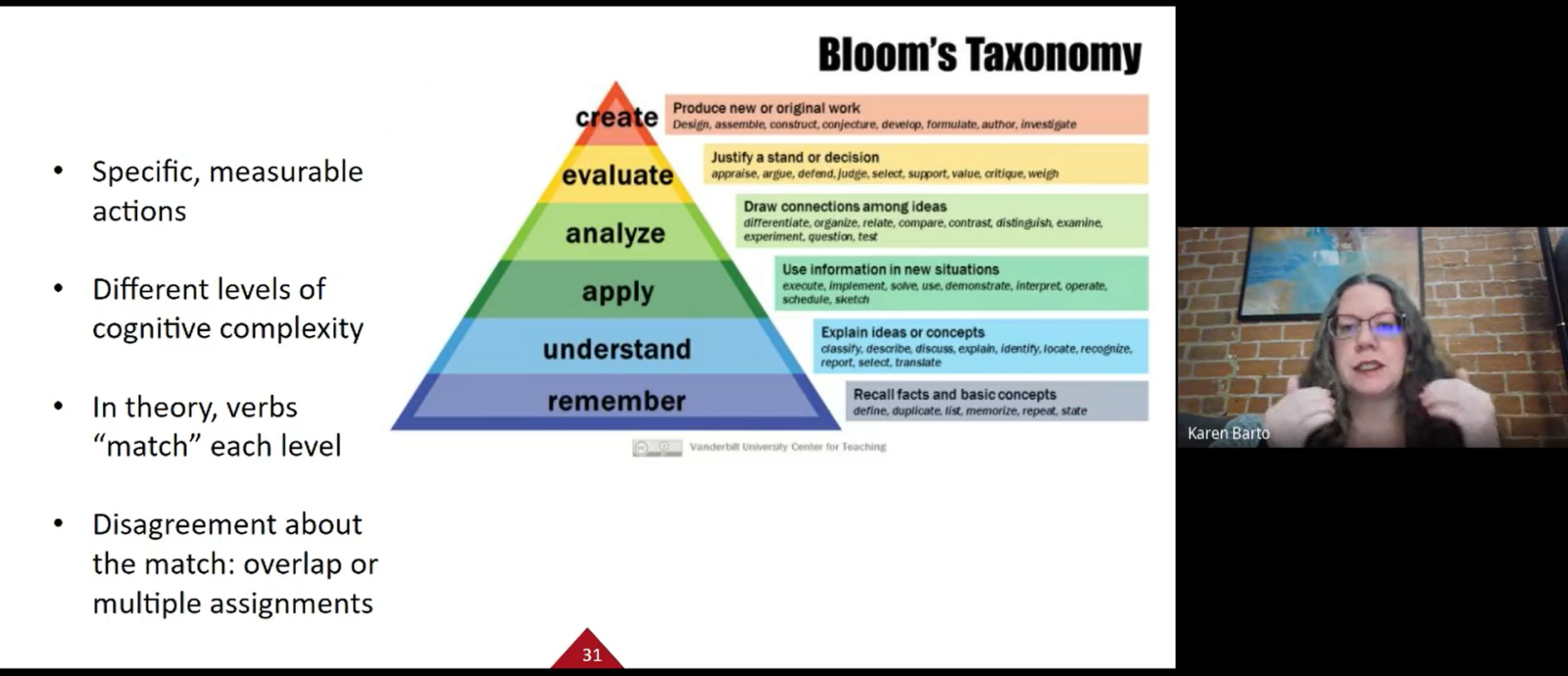
What is especially important is to present learning objectives explicitly to students, and Bloom’s Taxonomy serves well as guidance.
Apart from the design, learning assessment is equally important to test the efficacy of the course.
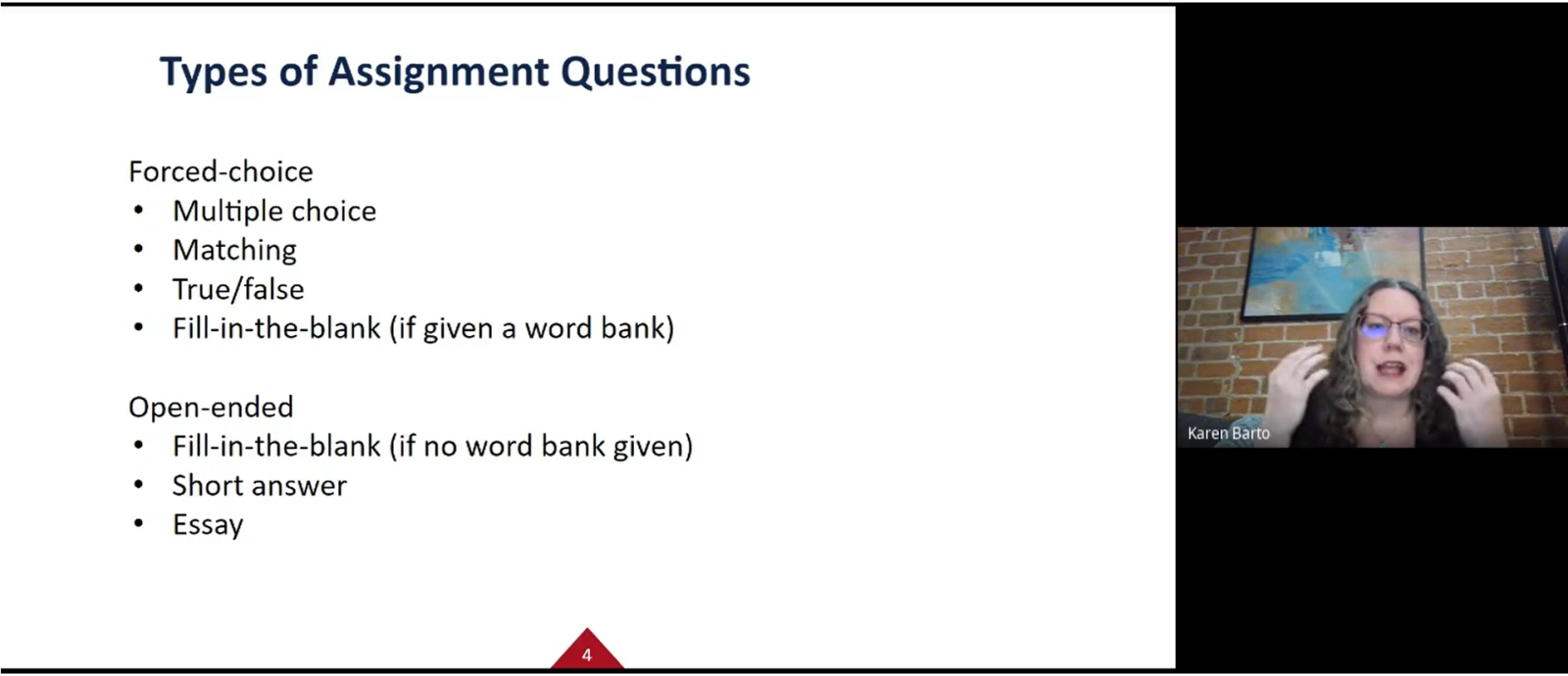
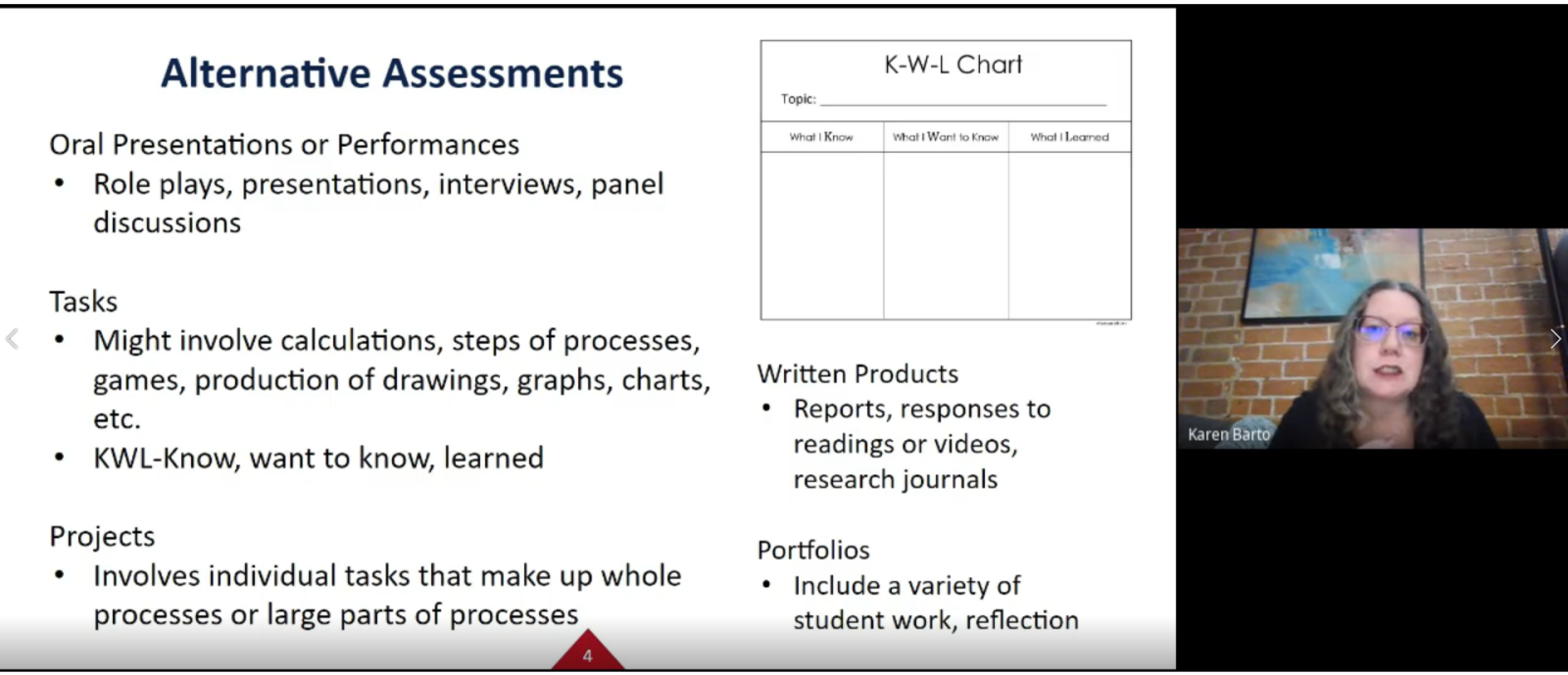
Dr. Barto enumerated the principles of assessment to follow, gave examples of questions and forms of assessment,
and ended the session with group discussion on experiences of assessment and the hypothetical questions she posed.
※ Lesson and course designs:
1. Backward Design: This design is a format that sets in advance the end goal or learning objectives according to the lesson or course that will be carried out.
Objectives should be made clear to students. For the assessment part, learning activities are designed to test if students can understand and apply the concepts explained.
In reality, it manifests as a back-and-forth re-inspection of the overall design, and it is usually used intuitively.
2. Project-based Learning: This refers to a teaching method that is designed for students to develop the target skills and knowledge throughout a project that lasts for an extended period of time, ranging from a week to a semester.
Authentic, realistic, or intricate questions, problems, and challenges are responded to in this process.
3. Flipped Classroom: Basically modes different from that of traditional lecture all count as flipped classroom: videos/audios, in-class tasks/projects, etc.
The purpose is to establish students’ learner autonomy and guide them to learn on their own pace.
However, the situation might sometimes turn out chaotic. Therefore, the teacher as the on-the-spot facilitator and advisor should find ways to engage students.
4. Team Based Learning: It comprises three steps that form a cycle: 1) Preparation: Students complete pre-class activities. 2) Readiness Assurance Testing: Students answer multiple-choice questions to test their readiness assurance.
3) Application-focused exercise: Students from diverse backgrounds form groups and work together to solve problems/challenges.The goals are to build students’ self-awareness as learners and communication skills.
※ Bloom’s Taxonomy:
There are ascending cognitive levels according to which teachers can properly assess the effectiveness of their course designs by referring to the developmental stages based on which students can be guided gradually.
Students should also be explained to and get ready for why and how their performance is assessed.
※ Assessment:
When designing an assessment to evaluate the learning outcome, the principles of assessment should be borne in mind:
1. Validity─pertinence of assessment
2. Reliability─adequacy of assessment for students to demonstrate what they learn)
3. Practicality─convenience to perform assessment
4. Washback─further consequence after assessment
5. Authenticity─assessment’s relevance to real-world concern
#AIT #ELS #EMI